Education
Promoting sustainability awareness, skills, values and SDG-linked learning through academic, co-curricular and experiential activities.


Stella Mary's College of Engineering is committed to advancing sustainable development through quality education, research, innovation, responsible campus operations and community engagement. Our institutional roadmap provides a progressive framework for integrating sustainability into campus life and academic development towards 2030.
Stella Mary's College of Engineering recognises the important role of higher education institutions in contributing to sustainable development. The College seeks to progressively integrate sustainability principles into teaching and learning, research and innovation, campus operations, institutional governance, student development and community engagement. The framework is designed as an evolving institutional roadmap in which initiatives are assessed, planned, implemented, measured, reviewed and adapted according to institutional needs and measurable outcomes.
SMCE's sustainability approach connects academic excellence, research and innovation with responsible campus management, community participation and institutional governance.
Promoting sustainability awareness, skills, values and SDG-linked learning through academic, co-curricular and experiential activities.
Encouraging research, student projects, prototypes and technology solutions addressing environmental and societal challenges.
Progressively improving energy, water, waste, infrastructure, biodiversity and responsible resource management.
Connecting students and faculty with communities through outreach, awareness, service and sustainable development initiatives.
Strengthening institutional responsibility, documentation, monitoring, partnerships and evidence-based continuous improvement.
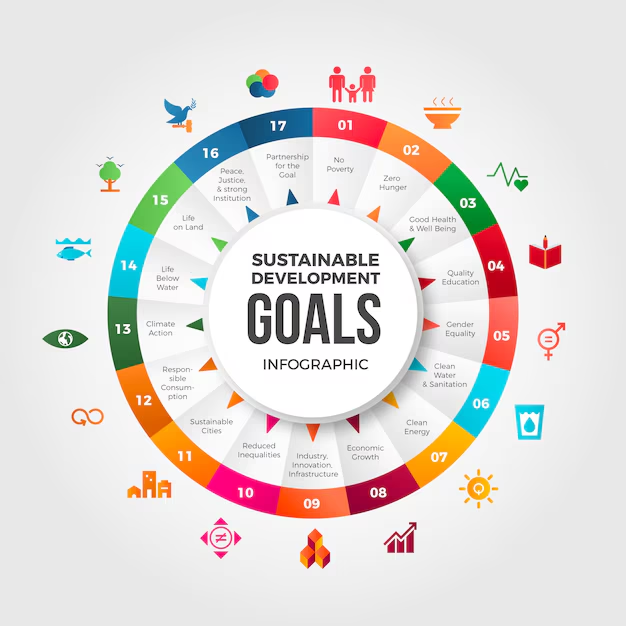
The Sustainable Development Goals provide an interconnected framework for addressing social, economic and environmental challenges. SMCE seeks to contribute through appropriate education, research, institutional and community initiatives.
Promoting social responsibility, community support, inclusion and equitable opportunities.
Encouraging food responsibility, awareness, community engagement and responsible consumption.
Supporting health, wellness, counselling, sports, fitness and a safe campus environment.
Advancing inclusive education, digital learning, skills, innovation and lifelong learning.
Supporting dignity, equal opportunity, participation, safety and empowerment.
Promoting water conservation, sanitation, rainwater harvesting and responsible water management.
Improving energy efficiency and encouraging renewable and responsible energy use.
Strengthening employability, entrepreneurship, professional skills and responsible growth.
Encouraging research, innovation, resilient infrastructure and industry collaboration.
Promoting accessibility, inclusion, student support and equitable participation.
Supporting resilient infrastructure, sustainable mobility and community-focused solutions.
Reducing waste and encouraging recycling, reuse and responsible resource utilisation.
Building climate awareness, resilience and environmentally responsible institutional practices.
Creating awareness of aquatic ecosystems and responsible environmental practices.
Supporting biodiversity, native vegetation, green cover and ecosystem conservation.
Strengthening ethics, transparency, responsibility and good institutional governance.
Building academic, industry, government and community partnerships for sustainable development.
All 17 goals are interconnected. The following goals have particularly direct relationships with higher education, engineering, student development, campus operations and institutional engagement.
SMCE translates relevant Sustainable Development Goals into practical institutional action areas that can be progressively implemented, documented, evaluated and strengthened.
The roadmap establishes a progressive pathway from baseline assessment and governance to campus implementation, academic integration, measurement and continuous institutional improvement.
Identify existing sustainability initiatives, establish baseline information, define institutional responsibilities and strengthen documentation.
Strengthen energy efficiency, water conservation, waste management, green-campus practices, accessibility and student participation.
Integrate sustainability into teaching, research, student projects, innovation, entrepreneurship and industry collaboration.
Measure institutional progress, identify gaps, strengthen successful interventions and expand high-impact initiatives.
Consolidate sustainability practices, communicate progress and establish the next cycle of measurable institutional targets.
The framework identifies key campus implementation areas and indicative performance measures. Baselines and annual targets can be refined as institutional monitoring systems and sustainability data mature.
| Focus Area | Campus Implementation | Indicative Performance Measures | Related SDGs |
|---|---|---|---|
| Energy | Energy conservation, efficient lighting, renewable-energy adoption, energy audits and awareness. | Electricity consumption, renewable-energy contribution and efficiency improvements. |
SDG 7
SDG 9
SDG 13
|
| Water | Rainwater harvesting, water conservation, monitoring, sanitation and reuse where feasible. | Water consumption, harvested water and conservation measures. |
SDG 6
SDG 11
SDG 12
|
| Waste Management | Segregation, recycling, reduction of single-use materials, e-waste management and responsible disposal. | Waste generated, segregated, recycled and responsibly managed. |
SDG 11
SDG 12
SDG 13
|
| Green Campus | Tree planting, native vegetation, biodiversity awareness and green-space protection. | Green cover, plantation records and biodiversity documentation. |
SDG 13
SDG 15
|
| Education | SDG awareness, curriculum linkages, seminars, workshops, projects and co-curricular learning. | Courses, activities and student projects mapped to sustainability themes. |
SDG 4
SDG 12
SDG 13
|
| Research | Research addressing sustainable technologies, environmental challenges and societal needs. | Projects, publications, proposals, patents and prototypes. |
SDG 4
SDG 9
SDG 13
|
| Innovation | Student innovation, sustainable engineering, entrepreneurship and interdisciplinary technology development. | Prototypes, innovations, startups, competitions and technology solutions. |
SDG 8
SDG 9
SDG 12
|
| Health & Well-being | Health awareness, counselling, sports, fitness, safety and student well-being. | Programmes, participation and institutional support initiatives. |
SDG 3
|
| Equity & Inclusion | Inclusive participation, accessibility, equal opportunity and student support. | Accessibility initiatives, participation and support mechanisms. |
SDG 5
SDG 10
|
| Community Engagement | NSS activities, awareness programmes, technical outreach and community service. | Activities, beneficiaries, partnerships and documented outcomes. |
SDG 3
SDG 4
SDG 11
SDG 17
|
| Industry Collaboration | Industry-supported learning, research, innovation, internships and technology collaboration. | MoUs, projects, internships, joint activities and partnerships. |
SDG 8
SDG 9
SDG 17
|
| Governance | Policies, committees, audits, documentation, monitoring and sustainability reporting. | Policies, reports, audits, reviews and improvement actions. |
SDG 16
SDG 17
|
Sustainability is an evolving institutional process. The SMCE adaptability framework enables initiatives to respond to emerging technologies, environmental conditions, stakeholder requirements and measured outcomes.
Identify baseline conditions, available resources, challenges and existing sustainability practices.
Define priorities, responsibilities, performance indicators and achievable interventions.
Execute sustainability initiatives through coordinated institutional and campus participation.
Collect evidence and monitor defined sustainability performance indicators.
Evaluate effectiveness, identify gaps and document lessons and opportunities.
Refine targets and actions based on evidence, innovation and emerging requirements.
Academic departments can contribute to multiple SDGs through curriculum, research, student projects, innovation, professional activities and community engagement.
SMCE can progressively establish baseline values and monitor year-on-year performance using measurable institutional sustainability indicators.
Sustainable campus transformation requires coordinated participation across institutional leadership, academic departments, students and external stakeholders.
Provide institutional direction, policy guidance, support and resources.
Support quality monitoring, documentation and continuous improvement.
Promote research, innovation and technology-driven sustainability solutions.
Integrate relevant SDGs into learning, projects, research and activities.
Lead awareness, environmental, social and community initiatives.
Support sustainable academic, administrative and operational practices.
Participate in sustainable behaviour, innovation, projects and outreach.
Strengthen collaboration with industry, government, academia and communities.
Systematic evidence supports institutional learning, quality assurance, accreditation, reporting and continuous sustainability improvement.
The SMCE Sustainable Development Goals roadmap is designed to remain dynamic and adaptable. Initiatives, indicators and priorities may be reviewed periodically based on institutional performance, stakeholder needs, technological developments and emerging sustainability requirements. Through education, innovation, responsible campus management and collaborative action, Stella Mary's College of Engineering seeks to progressively strengthen its contribution towards a sustainable future.